
Why Truck Accident Claims Are More Complex Than Car Accident Cases in California
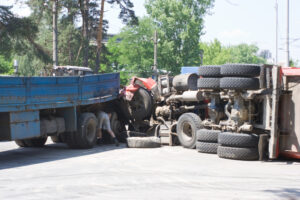 A truck accident claim in California is almost always more complex than a standard car accident case — and the gap is wider than most injured people expect. When a passenger vehicle collides with an 18-wheeler or other commercial truck, the injuries tend to be catastrophic, the investigation draws on federal safety rules, and legal liability can extend to the driver, the trucking company, a maintenance contractor, and a cargo loading firm — all at once, and each with its own insurer.
At the Law Offices of Keith J. Stone, our San Diego truck accident attorneys have been helping injured people across Southern California since 1986. Below, we explain the key factors that separate commercial truck accident cases from ordinary car crashes — and why those differences matter to the value and outcome of your claim.
The size disparity alone creates a different category of harm. According to the Insurance Institute for Highway Safety, large commercial trucks often outweigh passenger vehicles by 20 to 30 times. The majority of people killed in large-truck crashes are occupants of the smaller vehicle. That physical reality is the starting point for everything that makes these claims harder to litigate.
If a commercial vehicle collision has already disrupted your health, your income, or your family’s finances, contact us today for a free consultation with our firm.
Catastrophic Injuries Drive Up Claim Complexity
The injuries seen in commercial truck accidents are not merely “more severe” — they are often life-altering in ways that reshape every calculation in the case. Traumatic brain injuries, spinal cord damage, crush injuries, internal organ trauma, and permanent mobility impairment are all commonly documented after 18-wheeler collisions.
These injuries affect far more than the current hospital bill. Long-term losses in a serious truck accident claim may include:
- Future medical care, surgeries, and rehabilitation
- Lost wages and permanently reduced earning capacity
- Home care and assistance with daily living
- Pain, suffering, and loss of enjoyment of life
- Emotional distress and psychological treatment costs
Because the damages picture is larger and more complex to document, commercial insurers tend to contest both fault and the value of losses more aggressively than in a standard car crash. Our truck accident attorneys work with medical experts, life care planners, and vocational consultants to build a claim that reflects the full scope of what you have lost.
Federal FMCSA Regulations Add a Layer of Legal Analysis
Ordinary car accident cases are governed by state traffic law, police reports, and witness statements. Truck accident cases in California add an entirely separate body of federal law through the Federal Motor Carrier Safety Administration (FMCSA).
FMCSA regulations govern almost every aspect of commercial trucking operations, including:
- Hours-of-service rules (e.g., the 14-hour duty window for property-carrying drivers)
- Mandatory rest periods and off-duty time requirements
- Driver qualification, licensing, and background check requirements
- Drug and alcohol testing programs
- Vehicle inspection, maintenance, and repair obligations
- Cargo securement and weight limits
Violations of these rules don’t just help establish negligence — they can shift how courts and juries view the entire case. Electronic logging device (ELD) data, dispatch records, driver qualification files, and maintenance logs all become critical evidence. Our commercial truck accident lawyers know how to obtain, preserve, and analyze this evidence before it disappears.
Multiple Defendants Mean Multiple Insurance Layers
In a car accident, liability typically focuses on one driver. In a California trucking accident, the web of potentially responsible parties is far wider:
- The truck driver (negligent operation, fatigue, distraction)
- The trucking company or motor carrier (negligent hiring, supervision, scheduling)
- The vehicle owner (if different from the carrier)
- The maintenance contractor (if mechanical failure contributed)
- The cargo loading company (if improper loading caused a shift or spill)
- The truck or parts manufacturer (if a defect was involved)
Each party may carry separate insurance policies, retain separate defense lawyers, and assert separate defenses — often pointing fingers at one another. Coordinating a claim against multiple defendants requires a thorough review of driver training records, carrier contracts, delivery schedules, repair histories, and cargo manifests. Our truck accident lawyers build that full picture so that no liable party escapes accountability.
Critical Evidence Disappears Quickly — Early Action Is Essential
Unlike a car accident, where the main evidence is a police report and vehicle damage photos, commercial truck accident cases rely on categories of evidence that can vanish fast:
- Event data recorder (“black box”) data showing speed, braking, and throttle
- Dashcam and forward-facing camera footage
- Electronic logging device records showing hours on duty
- GPS and dispatch communication logs
- Weigh station and inspection records
- Driver qualification and prior violation files
- Post-accident drug and alcohol test results
Carriers may overwrite electronic data within days under routine document retention policies — unless a legal hold notice is served promptly. Sending that preservation demand is often one of the very first steps our San Diego personal injury lawyers take after being retained. Delay is not a neutral choice in these cases; it can permanently eliminate your strongest evidence.
High-Stakes Insurance Policies Mean a More Aggressive Defense
Federal regulations require commercial carriers to carry substantially higher liability insurance minimums than ordinary drivers. Those larger policies do not make claims easier to resolve — they make the defense more organized and more aggressive from the start.
The National Highway Traffic Safety Administration reported that 5,788 people were killed in crashes involving large trucks in 2021, with 72 percent of those fatalities being occupants of other vehicles. Carriers and their insurers understand the financial exposure these cases represent, and they often deploy experienced defense teams immediately after a serious crash.
Tactics commonly used by trucking company insurers include:
- Rapid deployment of investigators to the crash scene
- Early blame-shifting toward the injured driver
- Challenges to medical causation and the necessity of treatment
- Attempts to minimize long-term injury and future care projections
Meeting that level of defense requires a legal team with experience in the trucking industry — not just general personal injury practice.
Company Records Can Reveal a Pattern of Unsafe Conduct
Some of the most valuable evidence in a truck accident lawsuit is not at the crash scene — it is inside the trucking company’s own files. Driver hiring records, prior safety violation notices, inspection histories, previous accident reports, and internal communications can reveal whether the collision was part of a systemic problem rather than an isolated event.
A carrier that knowingly kept an unqualified driver behind the wheel, or ignored a pattern of hours-of-service violations, faces potential exposure beyond basic negligence. Our commercial vehicle accident attorney Keith J. Stone has been litigating cases like these since 1986, and that experience includes understanding which company records to subpoena and how to use them to build a complete liability picture.
You can learn more about Keith J. Stone’s background and the firm’s litigation history on the attorney profile page, which includes truck accidents among the firm’s documented areas of practice.
Case Results and Resources Support Your Research
The firm’s website includes case results for past auto accident recoveries, including a $1.9 million automobile accident settlement. While every case depends on its own facts — and no outcome is guaranteed — that kind of public record reflects real litigation experience rather than general marketing language.
Prospective clients researching the firm can also review client testimonials and the firm’s Avvo profile as part of their due diligence.
Acting Quickly Protects the Full Value of Your Claim
Many truck accident victims assume they can wait until medical treatment is nearly complete before speaking with a lawyer. In a commercial truck accident case in California, that delay carries real risk.
While you focus on recovery, the carrier’s defense team may already be:
- Interviewing witnesses
- Downloading and preserving only the electronic data helpful to their case
- Building a narrative that shifts fault away from their driver
- Preparing to argue that your injuries were pre-existing or unrelated
Early legal representation allows our team to serve preservation demands, identify every liable party, investigate the crash independently, and ensure the facts are fully developed before the other side shapes the story. The sooner you act, the stronger your position.
Frequently Asked Questions About California Truck Accident Claims
How long do I have to file a truck accident lawsuit in California?
California’s statute of limitations for most personal injury claims — including truck accident lawsuits — is two years from the date of injury. However, claims against government entities require a government tort claim within six months. Because critical evidence can disappear far sooner than the legal deadline, we strongly recommend consulting an attorney as soon as possible after the crash.
Who can be sued after a commercial truck accident in California?
Depending on the facts, potentially responsible parties can include the truck driver, the motor carrier or trucking company, the vehicle owner (if separate from the carrier), a maintenance provider, a cargo loading company, and — in defect cases — a parts manufacturer. Our attorneys investigate all possible sources of liability from the start.
What compensation is available in a California truck accident claim?
Injured victims may be entitled to compensation for medical expenses (past and future), lost wages and reduced earning capacity, pain and suffering, emotional distress, property damage, and — in cases of egregious misconduct — punitive damages. The full value of a claim depends on the severity and permanence of the injuries involved.
What makes a trucking company legally responsible for a crash?
A trucking company can be held liable under several legal theories, including respondeat superior (responsibility for employee drivers), negligent hiring or retention of an unqualified driver, failure to enforce hours-of-service rules, and inadequate vehicle maintenance. FMCSA regulation violations are often central to establishing carrier liability.
How much does it cost to hire a truck accident attorney in California?
The Law Offices of Keith J. Stone handles truck accident cases on a contingency fee basis — you pay no attorney fees unless we recover compensation for you. The initial consultation is free.
Speak With a San Diego Truck Accident Attorney Today
A commercial truck accident puts you in a different legal situation than most car crashes — one with more parties, more regulations, more evidence to gather, and more at stake. The Law Offices of Keith J. Stone has been navigating these cases for injured clients in San Diego and across California since 1986.
If a truck crash has disrupted your health, your income, or your family’s stability, contact us today to speak with our team about your options. We review truck accident cases throughout California, with no fees unless we win.
