
Common Hazards That Lead to Slip-and-Fall Accidents on Commercial Property
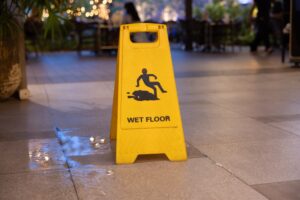 A slip-and-fall accident can happen in a grocery aisle, hotel lobby, restaurant entrance, office building, parking lot, or retail store. One missed spill, loose mat, broken step, or poorly lit walkway can turn a routine errand into a painful injury. Commercial property owners and operators are expected to keep their spaces reasonably safe because guests rely on those spaces being maintained with care.
At the Law Offices of Keith J. Stone, we help injured people understand how a fall happened, who may be responsible, and what evidence may support a claim. From our office at 555 W Beech St, Suite 210, San Diego, CA 92101, our firm serves people across Southern California in personal injury matters.
If you were injured on commercial property, preserve your shoes, clothing, photos, incident report, witness names, and medical records. Then, contact us today so our firm can review the hazard and the property owner’s response before key evidence disappears.
Why Commercial Slip-and-Fall Hazards Matter
Commercial properties receive steady foot traffic, deliveries, cleaning activity, weather exposure, and customer movement. A spill in a market, a raised floor transition at a shop entrance, or a puddle near a restroom can become dangerous when staff fail to inspect, warn, or repair the condition.
California law states that everyone is responsible for injuries caused by a lack of ordinary care in the management of property or person. That principle matters because the issue is not just that a fall occurred. The question is whether the business or property operator acted reasonably before the fall or when it should have discovered the danger through routine inspection.
When our slip and fall lawyer reviews a claim, we look at whether the business created the hazard, failed to find it during routine inspections, or waited too long to correct a known danger.
Wet Floors and Unmarked Spills
Wet floors are among the most common hazards in commercial spaces. Spilled drinks, leaking refrigeration units, mopped floors, restroom overflow, rain tracked into an entrance, and cleaning products can all reduce traction. The danger increases when the floor looks clean but remains slick.
The National Institute for Occupational Safety and Health has identified liquid and greasy materials as conditions that may create slippery surfaces. Its retail and wholesale fall-prevention guidance also recommends cleanup supplies, warning signs, mats, and safer floor practices.
In a wet-floor claim, our slip and fall attorney reviews when the spill appeared, whether employees passed through the area, whether cameras captured the hazard, and whether warning cones were visible before the fall.
Loose Mats, Floor Transitions, and Uneven Surfaces
Floor mats can reduce water and dirt at an entrance, but they can also become hazards when curled, bunched, worn, unsecured, or placed on an uneven surface. A mat that slides forward under a customer’s foot can cause a sudden fall, especially at a doorway where people are moving from outdoor pavement onto polished flooring.
Floor transitions can create similar risks. Raised thresholds, uneven tile, cracked vinyl, broken concrete, potholes, and abrupt changes from one surface to another can catch a shoe or walker. In commercial settings, customers often look toward products, signs, doors, or checkout lines.
A premises claim often turns on details. Photos, measurements, maintenance invoices, inspection logs, and prior complaints may help show whether the business had notice of the condition.
Poor Lighting in Walkways, Stairs, and Parking Areas
Bad lighting can make a dangerous surface harder to detect. A customer who cannot see a broken step, curb edge, pothole, drain cover, or change in floor level may not have enough time to adjust. Lighting problems often arise in stairwells, parking garages, outdoor walkways, loading zones, patios, corridors, and hotel common areas.
NIOSH guidance recommends proper lighting in indoor and outdoor areas so shadows, glare, and dark spots do not hide trip hazards or surface irregularities.
Poor visibility can affect how a fall occurred and whether the hazard should have been corrected sooner. Our premises liability lawyer may review photos, maintenance requests, bulb replacement records, and witness statements to determine whether lighting contributed to the fall.
Stairs, Handrails, and Walkway Maintenance
Stairs require consistent design, secure handrails, visible edges, and clean walking surfaces. A missing handrail, loose railing, broken stair nosing, uneven riser, slippery tread, or poorly marked step can cause a serious fall. Even a small defect can become dangerous in a crowded business entrance.
Walkway maintenance also matters in parking lots, sidewalks, patios, and shopping centers. Cracked concrete, tree-root lift, loose gravel, warped decking, and broken tiles can create a sudden loss of balance. Many commercial claims require a review of leases, maintenance contracts, property management duties, and ownership records.
With our premises liability attorney reviewing the claim, we examine who controlled the area, who handled inspections, and whether the responsible party failed to repair the hazard or provide a warning within a reasonable time.
Clutter, Merchandise, Cords, and Weather Hazards
Commercial property owners often use floor space for displays, signs, extension cords, baskets, boxes, racks, and seasonal inventory. These items can narrow walking paths or create trip hazards when placed poorly. Similar hazards appear when pallets, plastic wrapping, tools, electrical cords, and misplaced merchandise remain in customer areas.
Rain and coastal moisture can create hazards at store entrances, lobby floors, parking areas, and outdoor stairs. Even in San Diego, businesses should anticipate that wet weather may affect walking surfaces. Reasonable prevention may include absorbent mats, warning signs, prompt mopping, drainage checks, and employee inspections.
Weather may explain how water reached the floor, but it does not automatically excuse a business from using reasonable safety measures. Our personal injury lawyer can assess whether the business treated a foreseeable wet-floor risk as unavoidable.
How Evidence Helps Prove a Commercial Property Claim
A strong claim depends on proof. Useful evidence may include incident reports, photographs, video footage, witness names, employee statements, medical records, inspection schedules, repair orders, cleaning logs, and prior complaints. The injured person’s timeline also matters, including when pain began, when treatment was received, and how the injury affected work and daily routines.
The attorney profile for Keith J. Stone notes that he has practiced since 1986 and handles personal injury cases involving premises liability and slip-and-fall accidents. The firm’s testimonials reflect client comments about communication, case attention, and results.
Because evidence can disappear quickly after a commercial fall, our accident attorney can request key records early and review whether an insurer is unfairly shifting blame onto the injured person.
Related Premises Liability Results
The firm’s premises liability results include an $800,000 verdict with costs paid by the defense in a case involving a worker who slipped and fell at a high-end retail store after a cleaning company failed to use a caution wet sign. The same results page states that outcomes depend on the facts and legal circumstances of each case, so prior results do not promise the same result in another matter.
Those results are relevant because a commercial fall claim may involve more than the store itself. A cleaning company, property manager, contractor, landlord, tenant, or maintenance provider may share responsibility depending on who controlled the hazard and who had the duty to fix it.
A Safer Property Starts with Accountability
Commercial property owners invite people in for business, services, housing, dining, shopping, and work. When a preventable hazard causes a serious fall, the injured person should not have to guess who controlled the property, who ignored the risk, or who should pay for the harm. The Law Offices of Keith J. Stone has served the community since 1986 with a focus on personal injury cases, client relationships, and meaningful case outcomes. If a fall on commercial property left you injured, contact us today so our firm can review what happened and explain the next steps.
